
Amazon accounts can contain much more than a shopping history. Depending on how you use Amazon, an account may be connected to saved addresses, payment methods, subscriptions, digital purchases, seller activity, publishing services, and other Amazon products.
For this reason, Amazon uses different security mechanisms to confirm account access and protect sensitive actions. One of the most familiar is the one-time password, or OTP, which may be delivered through an available verification method.
Phone numbers can play a role in this process, but Amazon phone verification is not simply a matter of entering a number and receiving one SMS.
The verification process can depend on the type of account, the security settings already configured, the action being performed, and the authentication methods available to you.
In this guide, we'll explain how Amazon phone verification works, what Amazon OTP codes are, how Two-Step Verification works, why security codes sometimes fail to arrive, how virtual numbers fit into the process, and why long-term access to your verification methods matters.
What Is Amazon Phone Verification?
Amazon phone verification is a process used to confirm that you have access to a particular phone number.
When phone verification is required, Amazon may send a one-time code that you enter during the verification process.
The purpose is to confirm access to the communication method associated with the request.
However, phone verification can appear in different situations.
For example, you may encounter a verification request when:
signing in to an account;
configuring security settings;
using Two-Step Verification;
confirming certain account changes;
accessing an Amazon service with additional security requirements;
recovering or protecting account access.
The exact process can vary depending on the Amazon service and account configuration.
What Is an Amazon OTP?
OTP stands for one-time password.
It is a temporary code intended for a specific authentication or verification attempt.
An OTP is different from your regular Amazon password.
Your account password is a reusable credential. An OTP is designed to be temporary and is generally used as an additional proof that you have access to an approved verification method.
Depending on the Amazon service and security configuration, OTPs may be associated with SMS, phone-based verification, or other authentication methods.
Because an OTP is temporary, receiving an old code does not necessarily mean that it will still work after a newer code has been requested.
Why Amazon Uses Verification Codes
Passwords alone have limitations: they can be guessed, reused across websites, exposed through phishing, or compromised in data breaches. Additional verification creates another barrier between an attacker and the account, ensuring that unauthorized sign-in attempts fail even if a password is leaked.
This extra security layer is particularly vital for accounts holding saved payment details, active orders, digital libraries, or commercial operations. The goal of verification is not merely confirming a telephone number, but establishing robust, multi-layered account protection.
What Is Amazon Two-Step Verification?
Two-Step Verification, often abbreviated as 2SV, adds an additional authentication step to an Amazon account.
Instead of relying only on a password, the account uses another method to verify access.
Depending on the Amazon service and configuration, available methods can include an SMS or voice-based OTP and an authenticator app.
An authenticator app generates verification codes without relying on SMS delivery.
This distinction becomes important when considering long-term account security.
If your account depends exclusively on a phone number and you lose access to that number, authentication can become more difficult.
Using additional available security methods can reduce dependence on a single phone number.
Amazon OTP vs Account Password
An Amazon OTP and an account password serve completely different roles. Your password is a reusable credential used for regular access, while an OTP is a time-limited token designed to verify a single session or action. You should never treat an OTP as a reusable password or store it for later.
Legitimate verification codes prove immediate access to a specific authentication method. Never share an OTP with anyone—including callers claiming to represent customer support. If you receive an unexpected code, do not disclose it, as sharing defeats the core purpose of two-step security.
Does Amazon Require a Phone Number?
A phone number can be used in Amazon account and security processes, but it should not be assumed that every Amazon service, every account, and every action follows exactly the same verification procedure.
Amazon operates many different services.
A consumer shopping account, Amazon Seller account, Kindle Direct Publishing account, and AWS account may have different security workflows and requirements.
The authentication options available can also depend on what has already been configured for the account.
For this reason, it is better to follow the verification methods presented for the specific Amazon account or service rather than assuming that phone verification is universally required.
Can Amazon Send Verification Codes by SMS?
SMS can be used as a verification method in Amazon security workflows where phone-based authentication is supported.
The basic process is familiar:
A phone number is associated with the relevant verification process.
Amazon generates a temporary code.
The code is delivered to the number.
You enter the code to complete the requested verification step.
However, successful SMS delivery depends on more than simply having a phone number.
The number must be able to receive the required message, the SMS must be delivered successfully, and the number must be accepted for the relevant Amazon process.
These are separate conditions.
Can Amazon Verification Codes Be Received Without SMS?
In some Amazon security workflows, yes.
Authenticator apps can provide one-time codes without waiting for a text message.
This can be useful when mobile reception is poor, when SMS delivery is delayed, or when you want to reduce dependence on a phone number.
The important point is that OTP does not automatically mean SMS.
An OTP describes the temporary credential itself. Different technologies can be used to generate or deliver it.
For a long-term Amazon account, understanding the available alternatives can make account access more resilient.
Can You Use a Virtual Number for Amazon Verification?
An SMS-enabled virtual number can receive text messages without requiring you to keep another physical SIM card in your phone.
However, this does not mean that every virtual number will work with every Amazon verification process.
Virtual numbers differ significantly.
They can use different telecommunications infrastructure, assignment models, number types, countries, operators, and SMS capabilities.
Amazon also controls whether a particular verification method is available and whether a number can be used in a specific process.
Therefore, successful Amazon verification should never be treated as universally guaranteed simply because a virtual number can receive SMS.
What Is an Amazon Verification Number?
There is no special category of telephone number technically known as an "Amazon verification number."
The phrase generally refers to a phone number being used to receive an Amazon verification or security code.
That number may be associated with a conventional mobile subscription or another SMS-capable service.
What matters is not the marketing label attached to the number.
The important questions are:
Can the number receive the required message?
Is the number available for the relevant Amazon verification process?
How long will you control the number?
Could you need access to it again later?
The last question becomes particularly important for long-term accounts.
Temporary Virtual Numbers and Amazon
Temporary virtual numbers provide access to a phone number for a limited purpose or period.
This can be convenient when short-term SMS access is needed.
But temporary access creates an important limitation:
you may not control the same number in the future.
Receiving an Amazon OTP today does not necessarily mean that you will never need access to the associated verification method again.
If a phone number becomes part of the security configuration of an important account, losing access to it can create problems later.
This is why temporary numbers should not automatically be treated as long-term recovery credentials.
The appropriate choice depends on what the number will be used for and how long the account needs to remain accessible.
Short-Term Verification vs Long-Term Account Security
These are two different problems.
For short-term verification, the immediate question is whether you can receive the required code.
For long-term account security, the question is whether you will still control the necessary authentication methods months or years later.
An Amazon account may become more valuable over time.
A simple shopping account can accumulate digital purchases, subscriptions, payment information, order history, or other important data.
A seller account can become part of a business.
A publishing account can become connected to books and royalty payments.
As the value of an account increases, long-term access becomes more important than the convenience of receiving the first verification code.
Virtual Number vs Personal Mobile Number for Amazon
A personal mobile number associated with a long-term mobile subscription may remain under your control for years.
That continuity can be valuable for account security.
A temporary virtual number serves a different purpose. Access may expire after a short period.
The difference is therefore not simply physical SIM versus virtual number.
The more important distinction is continuity of control.
If the phone number will remain an important authentication method, long-term control is valuable.
If the number is only needed for a short-lived process and will not become a recovery credential, the requirements may be different.
The correct choice depends on the role the number will play in the account.
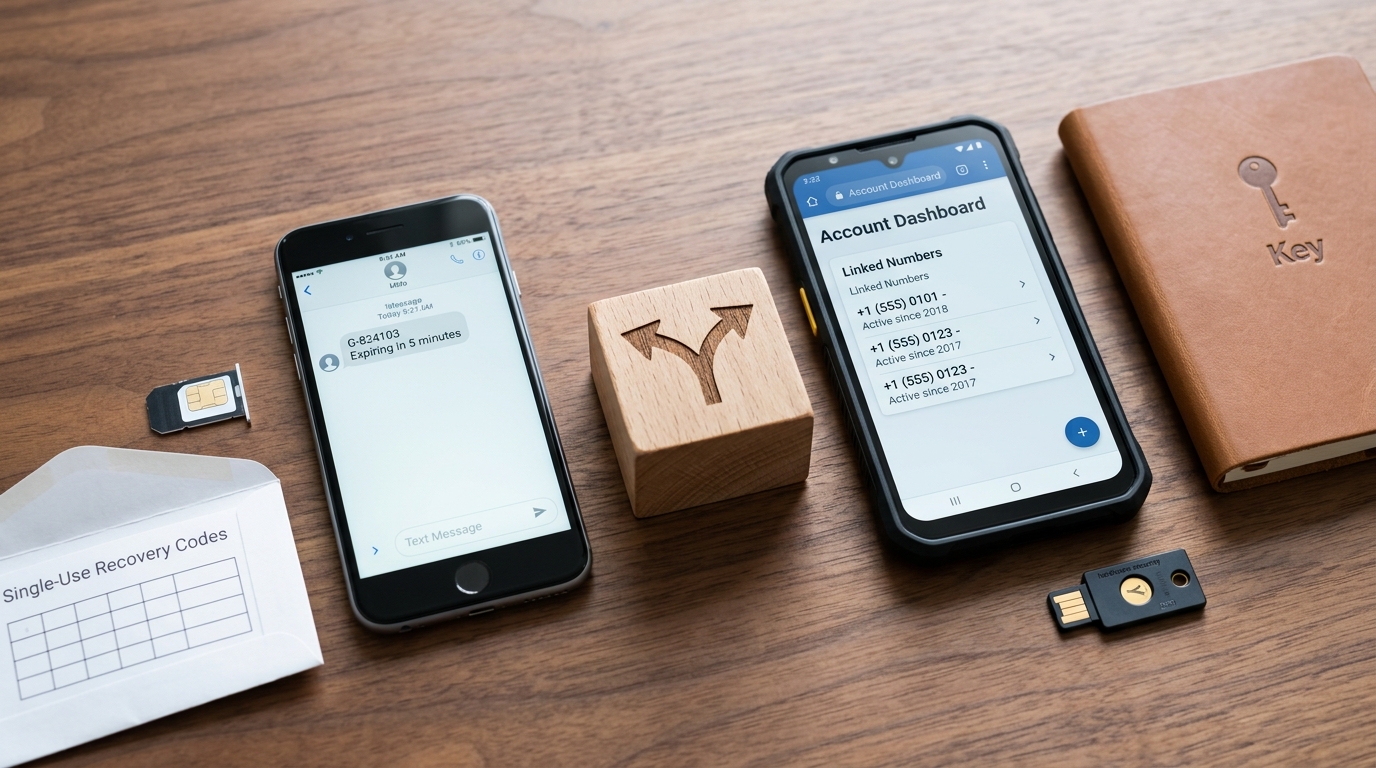
Virtual Number vs eSIM for Amazon
An eSIM and a virtual number are not the same thing.
An eSIM is a digital SIM technology that allows a compatible device to use a mobile subscription without inserting a traditional physical SIM card.
An eSIM plan may provide a conventional mobile number, SMS, voice, and mobile data.
Some travel eSIM plans, however, are primarily or entirely data-based and may not provide a normal phone number capable of receiving SMS.
A virtual number provides access to phone-number functionality without necessarily being part of a complete mobile subscription.
Therefore, neither the word "virtual" nor the word "eSIM" alone tells you whether a number can be used for a particular Amazon verification process.
The actual capabilities of the service matter.
Why an Amazon Verification Code May Not Arrive
There is no single explanation for every missing Amazon verification code.
The problem can occur at different stages.
Possible causes include:
an incorrect phone number;
an incorrect country code;
delayed SMS delivery;
poor mobile connectivity;
a number that cannot receive the required message;
an expired or inactive number;
repeated verification requests;
an older OTP being replaced by a newer one;
temporary security restrictions;
the account requiring a different verification method.
Before changing numbers, determine whether the problem is actually SMS delivery.
A number not receiving a message and a number not being accepted are different problems.
What to Do If an Amazon OTP Does Not Arrive
Start with the basics.
Check that the phone number is correct.
Verify the country code.
Make sure the number is active and can receive messages.
If you are using a virtual number, confirm that access to the number has not expired.
Then avoid requesting many codes in rapid succession.
Repeatedly generating OTPs can make the situation more confusing because you may receive delayed messages containing older codes after a newer code has already been generated.
If another authentication method is available, consider using it instead of repeatedly requesting SMS.
For example, an authenticator app can avoid dependence on mobile-network delivery when it has already been configured for the account.
SMS Not Received vs Number Not Accepted
This distinction is particularly important when troubleshooting.
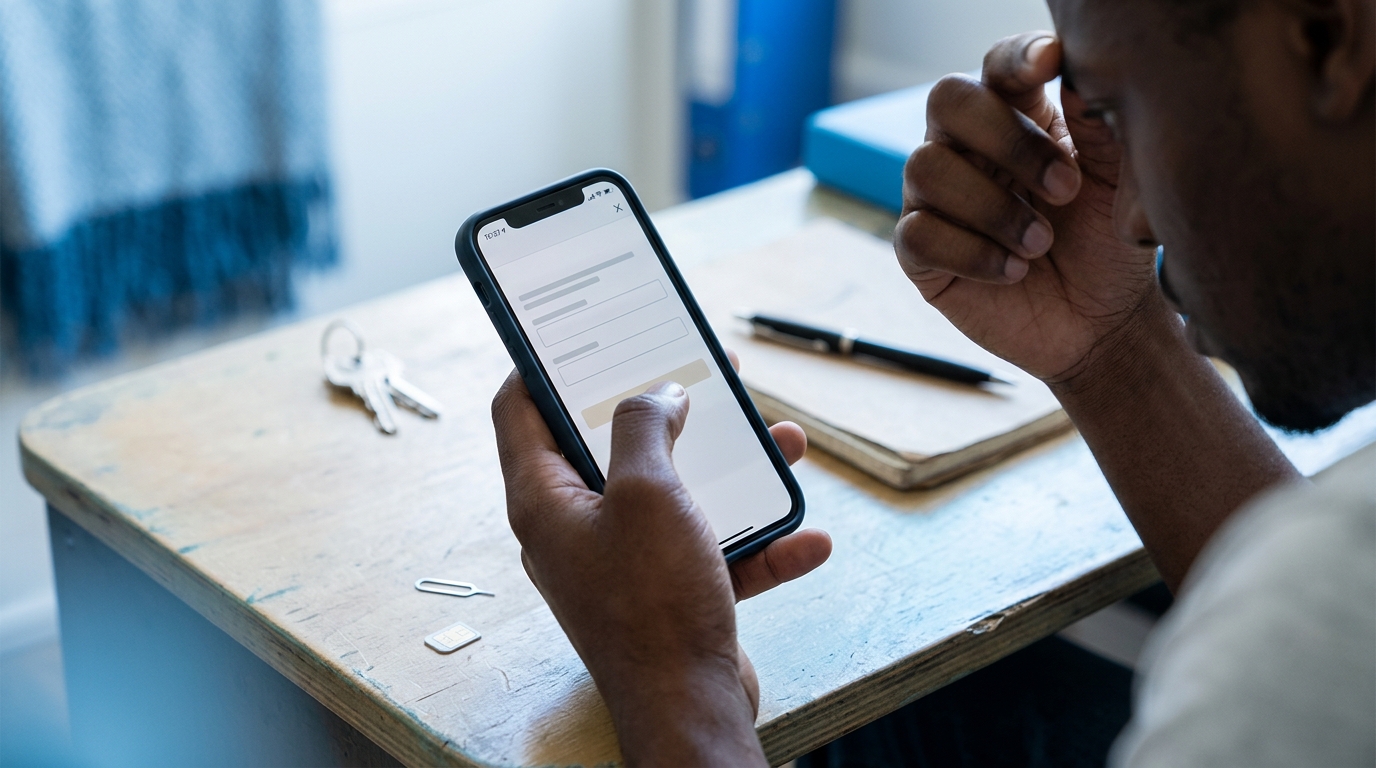
SMS not received
The verification process accepts the phone number, but the expected message does not arrive.
This can indicate a delivery, connectivity, formatting, or SMS-reception issue.
Number not accepted
The verification process does not allow the number to be used.
This is a different problem.
Obtaining another copy of the same type of number may not necessarily solve it.
When troubleshooting Amazon verification, first determine which of these situations you are dealing with.
Avoid Repeated OTP Requests
If a verification code does not arrive immediately, requesting another code every few seconds is rarely helpful.
SMS can sometimes be delayed.
When several OTPs are generated, you may receive multiple messages and accidentally enter an older code.
Security systems can also restrict repeated attempts.
A better approach is to check the number, wait for a reasonable period, review the available verification options, and then retry if necessary.
This makes it easier to determine whether the problem is with SMS delivery or the verification process itself.
What If You Receive an Amazon OTP You Didn't Request?
Do not share it.
An unexpected OTP can occur for several reasons.
Someone may have entered your phone number or account information by mistake. A previously requested message may have been delayed. Or someone may be attempting to access an account.
Whatever the cause, a verification code should not be provided to another person.
If you receive unexpected security messages and are concerned about the account, review the account's security settings and activity.
The important principle is simple:
A verification code is a security credential, even though it is temporary.
Amazon Two-Step Verification and Authenticator Apps
An authenticator app can generate time-based security codes without relying on SMS delivery.
This provides several practical advantages.
The phone does not need to receive a text message each time a code is required.
Authentication can continue even when mobile reception is poor, provided the authenticator has already been configured correctly.
It also reduces dependence on the continued availability of one telephone number.
For important Amazon accounts, this makes authenticator-based verification worth considering when the relevant Amazon service supports it.
Why Backup Authentication Matters
No authentication method should be treated as impossible to lose.
Phones can be lost.
Numbers can be cancelled.
Email accounts can become inaccessible.
Devices can break.
Authenticator apps can become unavailable if a device is replaced without proper preparation.
The goal is therefore not to find one perfect security method.
The goal is to avoid having a valuable account depend entirely on a single point of failure.
Where Amazon provides multiple security or recovery methods, keeping them current can make future account access much easier.
What Happens If You Lose Your Phone Number?
If the phone number is part of your Amazon security configuration and you permanently lose access to it, future verification can become more difficult.
The severity of the problem depends on which other authentication and recovery methods are available.
If you still have access to the account, update outdated security information before losing access becomes an emergency.
This is particularly important before:
cancelling a mobile subscription;
changing countries;
changing your primary number;
giving up a business phone number;
losing access to an employee-controlled number;
allowing temporary number access to expire.
Security information is easiest to manage while you can still access the account normally.
Verification Considerations by Account Type
Security requirements and recovery risks differ depending on how an Amazon account is used. Rather than evaluating a phone number solely on whether it receives a one-time code, consider the long-term operational impact if that number is lost.
Consumer Shopping Accounts
For standard retail accounts, verification protects saved payment cards, order histories, physical delivery addresses, and digital purchases. Relying on an expiring number risks permanent lockout from bought content and subscriptions if Amazon later prompts for re-verification.
Amazon Seller and KDP Accounts
Seller Central and Kindle Direct Publishing accounts govern active business operations, inventory, client communication, and royalty disbursements. In these commercial settings, authentication is a business-continuity priority. Access should never depend exclusively on a temporary number or an individual employee's personal SIM card.
AWS and Cloud Infrastructure
AWS accounts require dedicated enterprise identity management, including IAM policies, hardware MFA keys, and federated login. Temporary SMS verification numbers are not designed for enterprise AWS root credentials or administrator access.
Business Account Governance
Companies operating across Amazon platforms must treat authentication methods as corporate assets. Essential governance safeguards include:
Documenting formal account ownership and emergency recovery procedures;
Utilizing dedicated, company-controlled communication lines instead of private employee phones;
Configuring multi-factor authentication apps and designated hardware keys;
Promptly revoking and reassigning security credentials during staff transitions.
Is a Virtual Number More Private for Amazon?
Using a separate number can reduce the need to provide your primary personal mobile number for every online activity.
That can create separation between personal communication and other accounts.
However, this should not be confused with guaranteed anonymity.
A virtual-number provider may process account, payment, technical, or usage information according to its policies and applicable requirements.
Amazon may also process account, device, transaction, and security information independently of the phone number.
The practical privacy benefit is therefore separation of contact information, not complete anonymity.
Does the Country of the Phone Number Matter?
Country affects practical characteristics of a phone number.
These can include:
country calling code;
mobile operators;
availability;
pricing;
number type;
SMS capabilities.
But this does not establish that one country is universally "best" for Amazon verification.
Claims that US, UK, German, French, or other numbers are automatically more trusted should not be presented as fact without evidence.
A country code alone does not guarantee successful verification.
Choose a number according to the actual account requirements and the capabilities of the number rather than unsupported claims about country reputation.
Does Your Amazon Number Need to Match Your Location?
Not necessarily.
People move between countries, travel, retain phone numbers from previous countries, use international mobile plans, and access accounts while abroad.
A phone number's country code therefore does not always match the person's current physical location.
What matters is that the account and verification information are used legitimately and that you maintain access to the authentication methods associated with the account.
Trying to manipulate security systems by constantly changing account characteristics is not a reliable verification strategy.
How to Choose a Number for Amazon Verification
If phone verification is available and you need a number, start with the purpose of the account.
Do not start only with price.
Consider:
whether the number can receive SMS;
whether the relevant Amazon process accepts the number;
how long you will control it;
whether the number could be needed again;
whether the account is short-term or long-term;
whether alternative authentication methods are available;
whether the account contains valuable personal or business assets.
For an account you expect to maintain for years, continuity is more important than saving a small amount on the initial verification.
For an important business account, ownership and recovery planning become even more important.
Common Amazon Verification Mistakes
One common mistake is treating successful receipt of the first OTP as proof that account security is permanently solved.
Another is assuming that every SMS-enabled virtual number will work with every Amazon service.
A third is depending on a short-term number for an account that will be used for years.
Repeatedly requesting codes when SMS is delayed can also make troubleshooting more difficult.
Businesses can make an additional mistake by connecting important accounts to phone numbers controlled personally by individual employees.
Finally, users sometimes assume that Amazon shopping, Seller, KDP, and AWS all use identical verification systems.
They do not necessarily have the same authentication requirements.
Understanding the specific account and verification process should come before choosing the verification method.
Amazon Phone Verification FAQ
What is an Amazon verification code?
An Amazon verification code is a temporary security code used to confirm access during certain authentication or account-security processes.
What does OTP mean on Amazon?
OTP means one-time password. It is a temporary code used for a particular verification or authentication attempt.
Does Amazon require a phone number?
Phone numbers can be used in Amazon verification and security processes, but requirements can differ between accounts, services, and authentication configurations.
Can Amazon send an OTP by SMS?
SMS can be used to deliver OTPs in Amazon workflows where phone-based verification is supported.
Can I use a virtual number for Amazon verification?
An SMS-enabled virtual number may be able to receive Amazon messages, but successful verification is not guaranteed. Compatibility depends on the number and the specific Amazon verification process.
Why is my Amazon verification code not arriving?
Possible causes include an incorrect phone number, wrong country code, SMS delays, connectivity problems, an inactive number, repeated requests, temporary restrictions, or a different verification requirement.
What should I do if my Amazon OTP does not arrive?
Check the number and country code, confirm that the number is active, avoid repeatedly requesting new codes, and review whether another authentication method is available.
Can I use an authenticator app instead of SMS?
Amazon supports authenticator-based verification in relevant Two-Step Verification workflows. Availability depends on the Amazon service and account configuration.
Is an authenticator app the same as SMS verification?
No. An authenticator app can generate verification codes without receiving an SMS message from a mobile network.
Is an eSIM the same as a virtual number?
No. An eSIM is digital SIM technology used for mobile subscriptions. A virtual number provides phone-number functionality and does not necessarily include a complete mobile subscription.
Is there a best country for Amazon verification?
There is no universally best country. Country affects availability, operators, number types, and pricing, but a particular country code does not guarantee successful Amazon verification.
Should I use a temporary number for a long-term Amazon account?
Consider whether you may need access to the same number again. A short-term number should not automatically be treated as a reliable recovery method for a long-term account.
What should I do if I receive an Amazon OTP I did not request?
Do not share the code. Review the security of your Amazon account if you believe someone may be attempting to access it.
Is Amazon Seller verification the same as regular Amazon account verification?
Not necessarily. Seller accounts can involve additional identity, business, and security requirements. Do not assume that every verification process is identical to a standard customer account.
Is Amazon verification the same as AWS authentication?
No. AWS has its own identity and security systems and should not simply be treated as an extension of ordinary Amazon shopping-account verification.
Conclusion
Amazon phone verification is not simply about receiving one SMS.
A verification code is part of a larger security system designed to confirm account access and protect sensitive actions.
SMS may be one available method, but Amazon also uses Two-Step Verification and authenticator-based security in relevant account workflows.
Virtual numbers can provide access to SMS without another physical SIM, but not every virtual number is guaranteed to work with every Amazon verification process. More importantly, a number that works once should not automatically be treated as a reliable long-term recovery method.
The expected lifetime and value of the account should influence how you approach verification.
For a short-term process, immediate access to a code may be the primary concern.
For a long-term customer, Seller, publishing, or business account, continued access and recovery become much more important.
The best security strategy is therefore not simply to find a number that receives an Amazon OTP.
It is to maintain reliable control of the authentication methods connected to the account, keep security information current, use additional verification methods where appropriate, and avoid making a valuable account depend entirely on a phone number you may not control in the future.