Virtual phone numbers make it possible to use a telephone number without relying on a traditional physical SIM card in a single phone.
Depending on the service and number type, a virtual number may be used to receive SMS messages, handle voice calls, support business communications, or receive verification codes. But not every virtual number has the same capabilities, and the term “virtual number” covers several different types of telecommunications services.
Understanding these differences is important before choosing a number.
In this guide, we’ll explain what virtual phone numbers are, how they work, how they differ from traditional mobile numbers, VoIP numbers and eSIMs, what types of virtual numbers exist, and what limitations you should consider.
What Is a Virtual Phone Number?
A virtual phone number is a telephone number that can be managed or accessed without being permanently tied to one traditional physical SIM card and handset.
Instead of accessing the number only through a mobile phone, you may interact with it through:
a web dashboard;
an application;
cloud communication software;
business telephony systems;
an SMS receiving service;
another telecommunications platform.
The exact technology depends on the provider and type of number.
This distinction is important because “virtual phone number” does not describe one single technology.
Some virtual numbers support SMS. Some support voice calls. Some support both. Others are designed primarily for business telephony, call forwarding, software applications, or temporary SMS reception.
How Does a Virtual Phone Number Work?
From the user's perspective, the process can be simple.
You obtain access to a number through a provider and then use the provider's interface to manage incoming communications.
For example, an SMS-capable virtual number may work like this:
You obtain access to a phone number.
A sender sends an SMS to that number.
The message travels through the relevant telecommunications infrastructure.
The provider processes the incoming message.
The message becomes available through the provider's interface.
The exact routing and infrastructure can vary considerably between providers.
For this reason, it is better to think of a virtual number as a way of accessing telephone-number functionality through a service or software interface, rather than assuming that every virtual number works through the same technical architecture.
Does a Virtual Number Need a Physical SIM Card?
From the end user's perspective, usually no: you can access incoming messages or calls through software without inserting a physical card into your handset. However, this does not mean numbers exist in a vacuum separated from telecommunications infrastructure. Providers still host, route, or manage lines through carrier gateways and digital networks.
The important practical distinction is that you do not necessarily need a physical SIM card in your own device to access the number.
This can be useful when you need another phone number but do not want to maintain another physical phone and SIM card.
Virtual Number vs Traditional Mobile Number
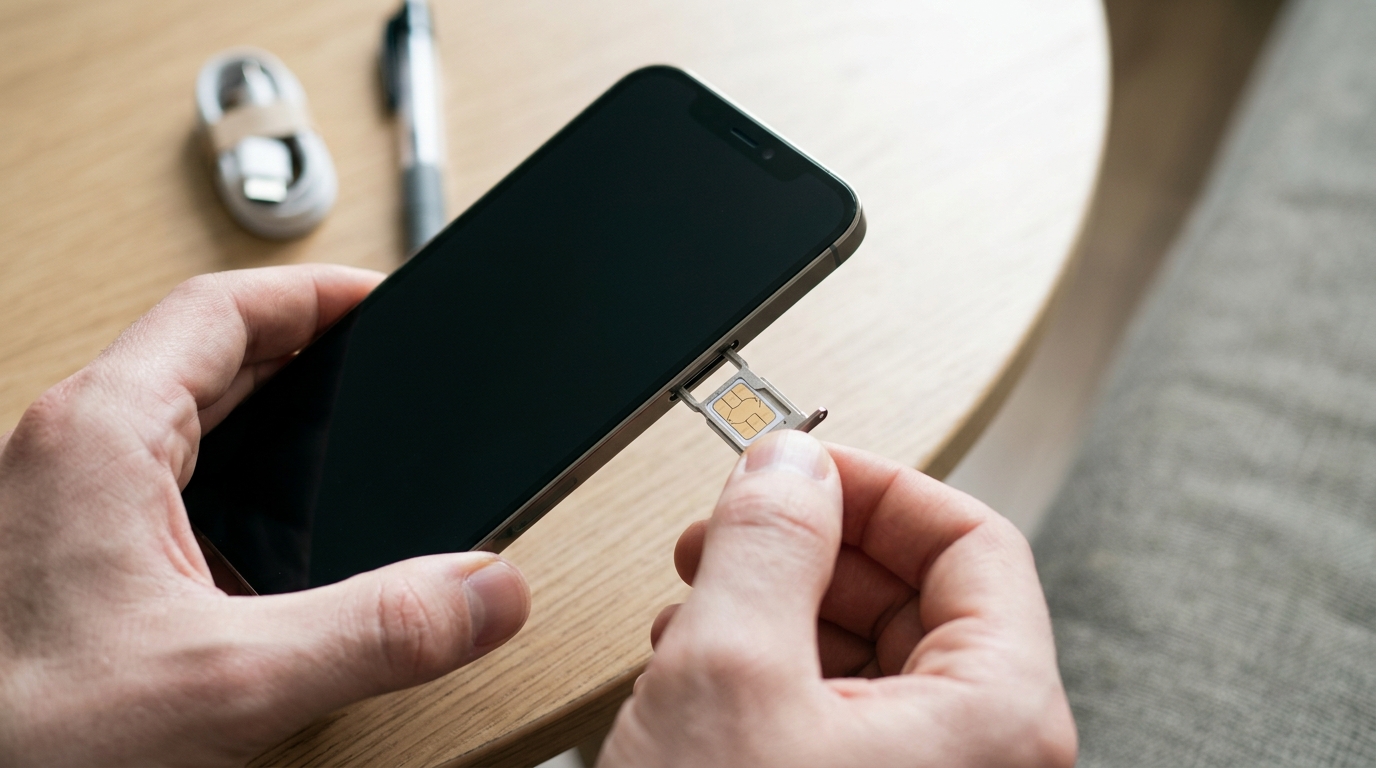
A traditional mobile number is normally associated with a mobile subscription and SIM or eSIM that connects a device to a mobile network. A virtual number may instead be accessed through an online service or communication platform.
Feature | Traditional Mobile SIM | Virtual Phone Number | VoIP Number | eSIM |
|---|---|---|---|---|
Physical SIM Required | Yes (physical card) | No (cloud/software access) | No (internet-based) | No (embedded chip) |
Access Method | Handset and cellular carrier | Web dashboard, app, or API | VoIP software or SIP client | Handset and cellular carrier |
Primary Function | Voice, SMS, and cellular data | SMS reception or call routing | Voice communications over IP | Full carrier plan connectivity |
Longevity & Control | Long-term personal control | Temporary session or rental period | Ongoing subscription | Long-term personal control |
Verification Acceptance | Standard mobile acceptance | Depends on platform and line type | Often restricted by fraud filters | Standard mobile acceptance |
When to Rely on a Traditional Mobile Number
A traditional carrier number (whether physical SIM or eSIM) remains essential for primary personal communication, mobile data, and critical security recovery on high-value accounts. Because you maintain ongoing contract ownership, you retain reliable access whenever a platform requires multi-factor authentication or account restoration.
When a Virtual Number Makes Sense
Virtual numbers excel at targeted use cases where carrying an extra physical handset or committing to a monthly carrier plan is unnecessary. They are well suited for separating personal contact details from public listings, receiving temporary verification messages, or routing incoming calls across team dashboards. Rather than replacing your primary mobile line, virtual numbers act as a flexible secondary layer.
Virtual Number vs VoIP Number
The terms virtual number and VoIP number are often used as though they mean exactly the same thing.
They do not.
VoIP stands for Voice over Internet Protocol. It refers to technology that can transmit voice communications over IP networks.
A VoIP number may therefore be a type of virtual number.
But the broader category of virtual numbers can include services designed for other purposes, including SMS reception and cloud-managed telecommunications.
This matters especially for online verification.
A website or application may treat different number types differently. A number capable of receiving a normal SMS is not necessarily treated the same way as another number by every online service.
So:
virtual number ≠ automatically VoIP number
and:
SMS-capable number ≠ automatically accepted by every platform.
Virtual Number vs eSIM
An eSIM is also different from a virtual phone number.
An eSIM is a digital form of SIM technology built into compatible devices. Instead of inserting a removable plastic SIM card, you can activate a mobile plan electronically.
The important point is that an eSIM is still a SIM.
It can connect your device to a mobile network and may provide:
a mobile number;
voice service;
SMS;
mobile data.
A virtual-number service, by contrast, may allow you to access a phone number through an online platform without activating a mobile subscription on your device.
Therefore:
eSIM = digital SIM technology
virtual number = phone-number functionality accessed through a service or platform
They solve different problems.
Can Virtual Phone Numbers Receive SMS?
Some can.
But SMS support should never be assumed merely because something is described as a virtual number.
A virtual number may be:
SMS-enabled;
voice-only;
designed for call forwarding;
intended for business telephony;
capable of both SMS and voice;
limited to specific types of messages.
If receiving SMS is important, check whether the specific number and service support it.
Can Virtual Numbers Receive Verification Codes?
Some virtual numbers can receive verification SMS messages.
However, two separate conditions are involved:
1. Can the number technically receive the SMS?
2. Will the website or application accept that number for its verification process?
These are not the same question.
An SMS-capable number can technically receive messages while still being rejected by a particular online platform.
Different services apply their own registration, security and anti-abuse rules.
Therefore, no provider should assume that every SMS-capable virtual number will work with every website or application.
If your primary purpose is account verification, it is useful to understand the broader verification process as well as the number itself.
Types of Virtual Phone Numbers
The term “virtual number” includes several products with different access models.
Understanding them helps you choose the right option.
Temporary Virtual Numbers
Temporary numbers provide short-term access.
They are commonly used when you need a number for a limited task rather than ongoing communication.
Depending on the provider, access may end after:
a completed activation;
a defined time;
cancellation;
expiration of the session.
Temporary access can be convenient, but it creates an obvious limitation:
you may not control the number later.
That matters if an account subsequently requires another code.
Rental Virtual Numbers
Rental numbers remain available for a defined rental period.
Instead of receiving one message and losing access to the number, you retain access according to the provider's rental conditions.
The period might vary depending on the service.
Rental numbers can be more appropriate when you expect to need the same number again.
However, rental should not automatically be interpreted as permanent ownership.
Check:
rental duration;
renewal conditions;
supported SMS or voice functionality;
what happens when the rental expires.
Dedicated or Private Virtual Numbers
A dedicated number is assigned for your use rather than being simultaneously shared with other customers.
These numbers can be useful when continuity and controlled access matter.
The exact meaning of “dedicated” or “private” varies between providers, so check the provider's definition rather than relying only on the label.
Shared Numbers
A shared number may be accessible or reused across different customers or sessions according to the provider's system.
This can reduce cost, but it also introduces limitations.
For example, a number may have been used for registrations before you received access to it.
For account verification, previous use can sometimes matter because individual online platforms may restrict repeated use of the same phone number.
Business Virtual Numbers
Businesses may use virtual numbers for purposes such as:
customer communication;
call routing;
support teams;
regional contact numbers;
software integrations;
centralized communications.
These products can be very different from temporary SMS verification numbers.
A business virtual phone system may focus primarily on voice communications, while an SMS verification provider may focus on short-term SMS reception.
That is another reason not to treat all virtual numbers as one product category.
Temporary vs Rental Virtual Numbers
The main difference is how long you retain access.
A temporary number is designed for short-term use.
A rental number provides continued access for a specified period.

For example, imagine you need a number during account registration.
If you only need to receive one code and will never need that number again, temporary access may be sufficient.
But suppose the account may later request another verification code.
In that situation, continued access becomes more important.
The decision should therefore be based on the expected life of the account rather than only on the cost of the first verification.
For important long-term accounts, consider whether losing access to the phone number could create recovery problems later.
What Are Virtual Phone Numbers Used For?
Virtual numbers have uses beyond account verification.
Separating Personal and Online Activity
Some people prefer not to provide their primary personal number to every website or online service.
A separate number can create an additional layer of separation.
This does not make your activity anonymous, but it can reduce how widely your primary number is distributed.
Business Communications
Businesses can use virtual numbers to organize incoming communications without requiring every interaction to go through an employee's personal phone.
Depending on the system, calls or messages can be routed to teams, applications or communication platforms.
SMS Reception
SMS-enabled virtual numbers can provide access to text messages through an online interface.
Account Verification
When accepted by the destination platform, an SMS-capable number may be used to receive a verification code.
Acceptance depends on the platform and the specific number.
Software Development and Testing
Developers and QA teams may need phone numbers when testing:
registration flows;
SMS delivery;
authentication;
account recovery;
messaging features.
The appropriate solution depends on the application and testing environment.
International Communication
Some providers offer numbers associated with different countries.
This can be useful for international business communications or other legitimate regional requirements without maintaining a separate physical phone for every number.
Advantages of Virtual Phone Numbers
Virtual numbers can provide several practical benefits.
No Additional Phone Required
You may be able to manage another number without carrying another physical handset.
Flexible Access
Depending on the provider, messages or calls may be accessible from a browser, application or business communication system.
Separation
A separate number can help keep personal and other communications apart.
Geographic Choice
Some providers offer numbers from multiple countries.
Different Access Periods
You can choose between short-term access and longer rental arrangements when those options are available.
Business Scalability
Cloud-based number management can be easier to organize than maintaining many separate physical devices for certain business workflows.
Limitations of Virtual Phone Numbers
Virtual numbers also have important limitations.
Not Every Number Supports SMS
Some virtual numbers are intended only for voice or call forwarding.
SMS Support Does Not Guarantee Verification Support
A platform can reject a number even if that number can receive ordinary SMS messages.
Temporary Access Can Create Recovery Problems
If you lose access to the number and an account later sends another code to it, recovery may become more difficult.
Numbers Can Be Recycled
Depending on the service, numbers may be returned to inventory and later reassigned.
Shared Numbers May Have Previous Use
A shared or reused number may already have a history with particular online services.
Features Vary by Provider
Do not assume that “virtual number” means:
SMS included;
voice included;
permanent ownership;
guaranteed verification;
guaranteed privacy;
unlimited access.
Always check the actual product conditions.
Are Virtual Phone Numbers Safe?
A virtual number is not inherently safe or unsafe.
Security depends on factors such as:
who controls the account;
how access is authenticated;
how long you control the number;
how the provider handles account security;
whether the number is shared;
what the number is used for.
For a low-value temporary task, short-term access may be sufficient.
For an important account containing sensitive information or valuable digital assets, long-term control and strong recovery methods become much more important.
The security decision should therefore be based on the consequences of losing access.
Are Virtual Phone Numbers Anonymous?
Not necessarily.
Using a virtual number can prevent you from giving your primary personal phone number to a particular website, but that is not the same as anonymity.
The website may process other information associated with your activity.
The virtual-number provider may also maintain account, payment, security or operational records according to its policies and legal obligations.
A more accurate description is:
virtual numbers can provide phone-number separation, but they do not guarantee anonymity.
Can Virtual Numbers Replace a Personal SIM?
Sometimes they can replace specific functions, but they are not a universal replacement for a personal mobile subscription.
A personal mobile plan can provide:
a stable long-term number;
mobile data;
calls;
SMS;
emergency and carrier services;
reliable access to a number you control.
A temporary virtual number may provide only short-term SMS reception.
These are fundamentally different products.
For most people, virtual numbers are better understood as an additional tool rather than a complete replacement for their primary mobile service.
How to Choose the Right Type of Virtual Number
Start with your use case rather than the country or price.
Do You Need SMS, Voice, or Both?
Check the actual capabilities of the number.
How Long Do You Need Access?
For a single short-term task, temporary access may be enough.
For an account you expect to maintain, longer access may be more appropriate.
Will You Need the Number for Account Recovery?
If the answer is yes, think carefully before using a number you may lose.
Is the Number Dedicated or Shared?
Understand who can access the number and whether it can be reassigned.
Do You Need a Particular Country?
If geography matters, check current availability rather than assuming that every country is always in stock.
Are You Using It for Verification?
Remember that receiving SMS and being accepted by a particular platform are separate issues.
What Happens If the SMS Does Not Arrive?
Review the provider's cancellation and refund rules before purchasing.
If SMS verification is your main use case, our How to Choose an SMS Verification Service: Complete Buyer's Guide explains the main factors to compare when evaluating a provider.
Common Misconceptions About Virtual Phone Numbers
“Every Virtual Number Is Temporary”
False. While temporary one-time numbers are common, many virtual numbers can be rented or assigned for weeks, months, or ongoing business use.
“Every Virtual Number Is a VoIP Number”
False. VoIP specifically refers to voice transmission over IP networks. While some virtual numbers rely on VoIP, others are specialized telecommunications numbers configured for SMS reception or call forwarding.
“Every Virtual Number Can Receive SMS”
False. Capabilities vary significantly by provider and line configuration. Some virtual numbers support incoming SMS, while others are strictly voice-only or call-forwarding lines.
“If It Can Receive SMS, It Will Work Everywhere”
False. Technical delivery and platform policy are different hurdles. Online services apply proprietary anti-fraud and registration checks, and some actively decline virtual or VoIP ranges even when SMS delivery works properly.
“Virtual Numbers Are Completely Anonymous”
False. A virtual number helps keep your personal phone number private from third parties, but providers and platforms still maintain connection logs, operational records, and account data subject to applicable regulations.
“The Most Expensive Number Is the Most Reliable”
False. Price reflects carrier routing, country overhead, and line features rather than a universal guarantee of verification acceptance.
“The Cheapest Country Is Always the Best Choice”
False. Country selection must match your destination platform's regional requirements. Choosing solely by the lowest cost can cause verification failure if the target service expects a domestic number.
Frequently Asked Questions
Are virtual phone numbers legal to use?
Yes, virtual number technology is legitimate and widely utilized worldwide for business telephony, software testing, and personal privacy. However, numbers must always be used in compliance with local telecommunications laws and platform terms of service.
Can I use a temporary virtual number for a long-term account?
Temporary numbers are designed for one-time tasks. If your account subsequently triggers additional verification or password recovery, you will not have access to that number once the temporary session expires. For persistent accounts, opt for a rental line or your primary carrier number.
Why do some online services reject virtual numbers?
Even if a virtual number technically accepts incoming messages, certain services check carrier databases and risk scores. They may filter out non-mobile or VoIP-associated ranges to deter automated registrations and abuse.
What should I do if an SMS verification code does not arrive?
Delivery issues often stem from platform-side anti-fraud filters, routing delays, or sender carrier restrictions. Verification services typically allow you to cancel an inactive session and test an alternative number or country if a code is not received within the operational window.
Conclusion
Virtual phone numbers are not one single product.
The term can describe several ways of accessing telephone-number functionality through online, cloud or telecommunications services without relying exclusively on a traditional physical SIM card in your own phone.
Some virtual numbers are designed for voice communication. Others support SMS. Some provide temporary access, while others can be rented or dedicated for longer periods.
That distinction is especially important for SMS verification.
A number being able to receive SMS does not guarantee that every online platform will accept it, and a number suitable for one-time verification may be a poor choice for an account that depends on long-term recovery.
Before choosing a virtual number, focus on what you actually need:
SMS, voice, or both;
temporary or long-term access;
shared or dedicated use;
a specific country;
account recovery;
verification compatibility.
Understanding those differences makes it much easier to choose the right type of number without relying on broad claims about “quality,” “trusted countries,” or guaranteed verification.