
On December 3, 1992, a 22-year-old software engineer sat at a computer in the United Kingdom and typed two ordinary words: “Merry Christmas.” The message travelled through Vodafone's mobile network and appeared on a colleague's telephone. There was no smartphone, messaging app, or emojis, and the recipient could not reply from the handset. Yet that small technical demonstration marked a turning point in telecommunications.
Within a decade, text messaging became woven into daily life for millions of people, reshaping personal relationships, commerce, and eventually how digital platforms verify user identities. But who actually invented SMS, why was it created, and how did a supplementary mobile feature become one of history's most ubiquitous communication tools? The story begins several years before that first holiday greeting.
Before SMS: When Mobile Phones Were Only for Talking
In the early 1980s, mobile phones were very different from modern devices: expensive, bulky, and designed strictly for voice calls. Many early mobile systems targeted business users, and car-mounted transceivers were common. Those needing to communicate without placing a voice call relied on pagers, faxes, or traditional landlines. Pagers offered only basic alert capability, fax machines required dedicated equipment, and calls demanded immediate, synchronized attention.
Meanwhile, European engineers were drafting specifications for a new generation of digital cellular networks known as GSM. While voice traffic remained the priority, engineers recognized an untapped opportunity: transmitting short text messages over existing network signaling channels without setting up an active voice circuit. The concept was straightforward, but engineering it across diverse networks and handsets presented substantial technical challenges.
Who Invented SMS?
There is no single person who can accurately claim sole responsibility for inventing SMS.
The technology emerged through cooperation between telecommunications engineers, network operators, and standards organizations during the 1980s.
Several individuals played particularly important roles.
Friedhelm Hillebrand: The Engineer Behind the 160-Character Concept
Friedhelm Hillebrand was a German telecommunications engineer working for Deutsche Bundespost, the predecessor of parts of today's Deutsche Telekom.
During the development of GSM, Hillebrand helped define the requirements for short text messages that could be delivered through mobile networks.
One of his most influential contributions concerned message length.
He argued that approximately 160 characters would be sufficient for many everyday communications.
Rather than simply guessing, he examined the length of short written communications, including postcards and telex messages.
He found that people could often communicate useful information in surprisingly little space.
This observation helped support a technical decision that would shape text messaging for decades.
Bernard Ghillebaert: Helping Turn the Idea Into a Standard
Bernard Ghillebaert, a French telecommunications engineer, worked alongside Hillebrand on the early SMS concept.
Their work helped establish the basic requirements for a short messaging service within the developing GSM system.
The challenge was not merely to transmit letters.
The service needed to operate across telecommunications networks, identify recipients, handle delivery, and function within the limited technical resources available.
Their proposals became part of a much larger international standardization effort.
Matti Makkonen: An Early Advocate of Mobile Messaging
Finnish telecommunications engineer Matti Makkonen is also frequently associated with the origins of SMS.
In 1984, he discussed the possibility of using mobile networks to exchange short written messages.
His contribution was part of the broader development of the concept, although he did not create the complete SMS system alone.
Makkonen himself resisted the idea that SMS had one individual inventor.
That distinction matters.
SMS was not a product created by a single person in a laboratory. It was a telecommunications standard developed through years of collaboration.
The Engineers Who Made SMS Work
Other engineers, including Finn Trosby, Kevin Holley, and Ian Harris, helped translate the original requirements into technical specifications.
Their work addressed the practical questions involved in making short messages travel reliably between mobile devices and networks.
By the time the first famous SMS was sent in 1992, much of the underlying technology had already been developed.
The Christmas message demonstrated the result of years of engineering work rather than the moment the idea was first conceived.
Why Was SMS Invented?
SMS was not originally designed to replace telephone conversations.
Its initial purpose was much more modest: to provide a simple way to deliver short information through a mobile network.
Network operators could potentially use the service to send notifications, alerts, and other brief communications.
Businesses could contact employees without requiring an immediate telephone conversation.
A message could be delivered even when the recipient was temporarily unavailable, because the network could store it and attempt delivery later.
This was an important advantage over voice calls.
If someone did not answer a telephone call, the communication often had to be attempted again.
With SMS, a message could wait until the recipient's phone became reachable.
There was also a technical advantage.
GSM networks included signaling resources used to coordinate mobile communications. SMS was designed to make use of this infrastructure without requiring a conventional voice call.
For network operators, that made short messaging an attractive additional service.
But there was something the early planners did not fully anticipate.
People would eventually use SMS not just to receive information, but to hold entire conversations.
Why Were SMS Messages Limited to 160 Characters?
One of the most recognizable features of traditional SMS was its 160-character limit.
The number became so familiar that it influenced how an entire generation communicated.
But why 160?
The answer involves both engineering constraints and observations about human communication.
The Technical Limitation
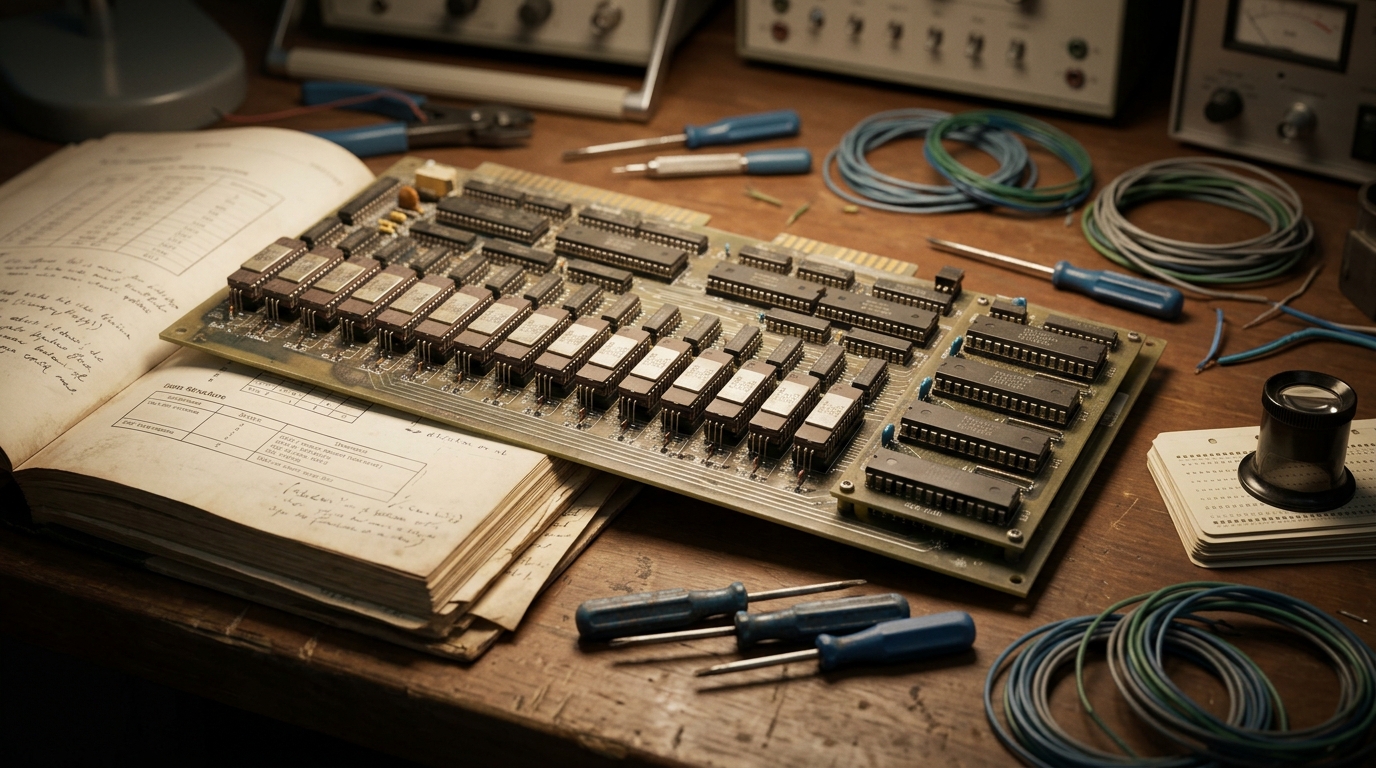
A traditional GSM SMS message has a payload of up to 140 bytes.
When the message uses the GSM 7-bit default alphabet, those 140 bytes can accommodate up to 160 characters.
This was a practical compromise between the limited capacity available for messages and the desire to send useful information.
However, the familiar 160-character rule does not apply to every possible character set.
Messages containing characters outside the GSM default alphabet may require another encoding, commonly UCS-2, which can reduce the capacity of a single SMS to 70 characters.
Longer messages can also be divided into multiple parts and reassembled by compatible receiving devices.
The original limit therefore reflected a particular technical design, not a universal limit on written communication.
The Human Experiment
Friedhelm Hillebrand also considered whether 160 characters would be enough for meaningful messages.
He studied short written communications and observed that many contained fewer characters than the proposed limit.
A quick greeting, an appointment reminder, a short question, or a simple instruction could fit comfortably within that space.
The reasoning was practical.
SMS was not intended to carry essays. It was intended to deliver brief information efficiently.
Ironically, the limitation helped create a distinctive communication culture.
People began shortening words, removing unnecessary punctuation, and inventing abbreviations.
Expressions such as “BRB,” “LOL,” and “CU” became familiar features of digital conversation.
A constraint originally imposed by telecommunications engineering helped influence the language of everyday messaging.
The First SMS Ever Sent: December 3, 1992
The first widely recognized SMS sent to a mobile phone was transmitted on December 3, 1992, through Vodafone's network in the United Kingdom.
The sender was Neil Papworth, a 22-year-old software engineer working for Sema Group Telecoms.
Papworth was part of a team developing and testing a Short Message Service Centre for Vodafone.
The recipient was Richard Jarvis, a Vodafone executive attending a Christmas gathering.
The message contained just two words:
“Merry Christmas.”
It was sent from a computer rather than another mobile phone.
That detail is important because mobile handsets at the time were not yet equipped to send text messages in the way people would soon take for granted.
The receiving device was an Orbitel 901, a large early GSM mobile telephone.
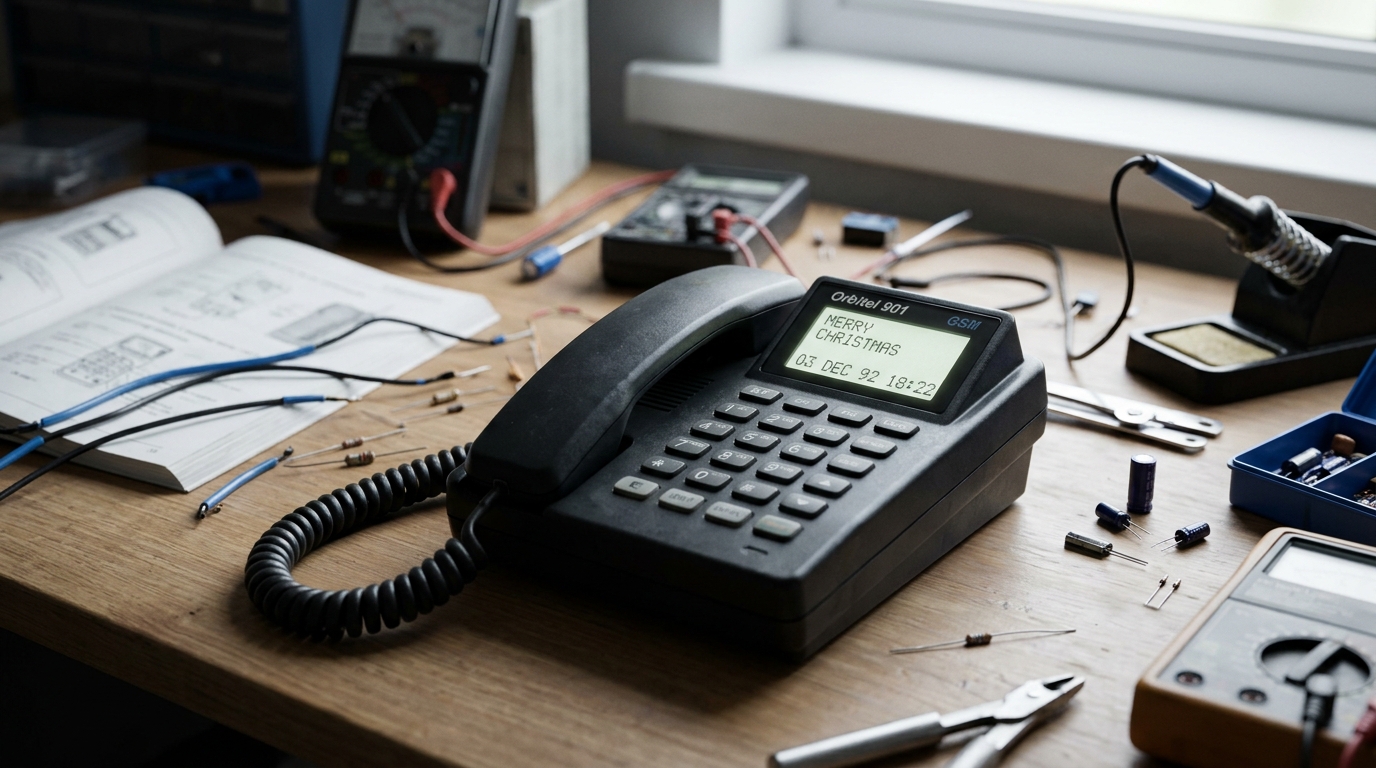
Jarvis could read the message, but he could not type a text reply on the handset.
The successful delivery was confirmed through conventional communication between people involved in the demonstration.
For Papworth, it was primarily a technical test.
He was helping verify that the software and network infrastructure worked correctly outside the development environment.
He did not know that the event would eventually be remembered as a milestone in telecommunications history.
There were no crowds celebrating a technological revolution.
There was simply an engineer doing his job and a Christmas greeting appearing on a mobile telephone.
Why Didn't SMS Become Popular Immediately?
Given how successful texting eventually became, it is easy to imagine that people immediately recognized its potential.
They did not.
During the early 1990s, SMS faced several obstacles.
First, mobile phones were still relatively expensive.
Second, typing messages on numerical keypads was inconvenient.
Third, early implementations had limitations involving handset support, network compatibility, and the ability to send messages between different operators.
And finally, many mobile operators viewed voice calls as their primary business.
Text messaging was initially treated as a supplementary feature rather than a major consumer service.
A service that required customers to press the same number key repeatedly to select individual letters did not look like an obvious replacement for talking.
Yet SMS had an advantage that was not immediately apparent to everyone.
A message did not demand the recipient's attention at the exact moment it was sent.
People could communicate quietly, discreetly, and at their own convenience.
As mobile phones became more affordable and SMS interoperability improved, those advantages became increasingly valuable.
How Teenagers Helped Make SMS a Global Phenomenon
One of the most interesting chapters in SMS history is the role of younger mobile phone owners.
During the late 1990s and early 2000s, text messaging became particularly popular among teenagers and young adults.
For many, sending a short message was more convenient than making a telephone call.
It could also be less expensive, depending on the mobile plan.
Prepaid mobile subscriptions helped make texting accessible to people who did not want or could not obtain traditional monthly contracts.
Young people quickly developed their own ways of communicating.
They shortened phrases, invented abbreviations, and used punctuation marks to express emotions.
A message did not need to be grammatically perfect.
It simply needed to be understood.
The numeric keypad, originally designed for dialing telephone numbers, became a writing instrument.
People learned to type quickly using combinations of repeated key presses.
Later, predictive text systems such as T9 made writing messages faster.
What began as a limited technical feature became a social habit.
People arranged meetings, maintained friendships, flirted, argued, apologized, and shared everyday moments through short text messages.
SMS changed the rhythm of communication.
For the first time, many people could maintain frequent written contact throughout the day without needing a computer or an internet connection.
When SMS Became Big Business
As texting grew, mobile operators discovered that short messages could become a significant source of revenue.
The service used relatively small amounts of network capacity, yet operators could charge customers for individual messages or messaging packages.
At the height of SMS popularity, enormous numbers of messages were being exchanged worldwide.
Businesses also recognized new opportunities.
Companies began using text messages for appointment reminders, delivery notifications, customer support, promotional campaigns, and transaction alerts.
Banks could notify customers about account activity.
Airlines could send travel updates.
Healthcare providers could remind patients about appointments.
SMS was no longer simply a convenient way for friends to communicate.
It had become an important business communication channel.
Its usefulness was especially apparent in places where internet access was limited or smartphones were not yet common.
A basic mobile phone could receive important information without requiring an application or mobile data plan.
How SMS Changed Communication Around the World
The impact of SMS extended far beyond personal messaging.
Its simplicity made it useful in environments where more sophisticated digital services were unavailable.
In some countries, text-based systems helped people access financial services, agricultural information, and public announcements.
Mobile money systems such as M-Pesa demonstrated how basic mobile communication technologies, including SMS and SIM-based interfaces, could support services beyond ordinary conversation.
SMS also became a tool for public communication.
Governments, organizations, and emergency services adopted mobile messaging for various forms of notification.
The technology made it possible to reach people through ordinary mobile telephone numbers rather than requiring everyone to install the same application.
That interoperability was one of SMS's greatest strengths.
Two people did not need to choose the same messaging platform.
They generally needed compatible mobile service and a reachable telephone number.
This was a major difference from many internet-based messaging applications that would appear later.
Why Did WhatsApp and Other Messaging Apps Replace SMS Conversations?
For years, SMS was one of the simplest ways to send a written message to another person.
But the arrival of smartphones and widespread mobile internet changed the situation.
Applications such as WhatsApp, Telegram, and other internet-based messaging services offered capabilities that traditional SMS could not easily match.
People could exchange photos, videos, voice messages, documents, and longer texts.
Group conversations became easier.
Messages could be synchronized across multiple devices.
Many services also introduced features such as delivery indicators, reactions, and end-to-end encryption.
Another important difference was pricing.
Traditional SMS could be billed per message, particularly for international communication.
Internet messaging applications generally transmitted messages using an existing data connection.
As mobile internet became more affordable and widely available, the appeal of paying separately for individual text messages declined.
Yet SMS did not disappear.
Instead, its role changed.
Why Is SMS Still Used for Verification Codes?
Today, many people receive fewer personal SMS messages than they did during the early 2000s.
But they still encounter SMS regularly when registering for online services, confirming transactions, or signing in to accounts.
A technology developed decades ago remains part of modern digital identity systems.
Why?
SMS Works Without a Dedicated Application
A service can send a conventional text message to a mobile number without requiring the recipient to install the service's own messaging application.
This makes SMS useful for reaching a wide range of mobile devices.
SMS Is Supported by Mobile Networks Worldwide
SMS is supported across many mobile networks and devices.
That broad compatibility allows businesses to communicate with customers who use different telephone models and mobile operators.
However, international routing, carrier filtering, and platform restrictions can still affect message delivery.
Phone Numbers Provide a Convenient Contact Point
Many online services use mobile numbers as one method of contacting or verifying an account holder.
When someone requests a verification code, the service can send a temporary code to the associated number.
Entering the correct code demonstrates access to that number's SMS reception at that moment.
It does not necessarily prove the recipient's legal identity or establish that the number will remain under their control.
SMS Verification Has Limitations
SMS verification is convenient, but it is not the strongest available authentication method.
Messages can be affected by SIM-swapping attacks, number reassignment, phishing, and other security risks.
For important accounts, passkeys, authenticator applications, and hardware security keys may offer stronger protection when supported.
Nevertheless, SMS remains widely used because it is familiar, broadly accessible, and relatively straightforward to implement.
It is also one reason online SMS-receiving services exist: some supported registration processes require a telephone number to receive a one-time code.
Temporary numbers can be suitable for certain one-time verification tasks, but they should not be relied upon as permanent recovery numbers for important accounts.
The technology's original purpose has evolved, yet its ability to deliver short information to a mobile number remains central to how it is used.
A Short Timeline of SMS History
Year | Milestone |
|---|---|
1984 | Early proposals and discussions about mobile text messaging, including contributions from Matti Makkonen |
1985 | SMS requirements enter the GSM standardization process |
Late 1980s | Engineers develop the technical specifications for SMS |
1992 | Neil Papworth sends the famous “Merry Christmas” SMS through Vodafone |
1993 | SMS-capable mobile handsets and early commercial services begin appearing |
Late 1990s | Greater interoperability and wider mobile adoption help SMS become mainstream |
2000s | Text messaging becomes a major form of personal and business communication |
2010s | Smartphone messaging applications increasingly replace personal SMS conversations |
2020s | SMS continues to serve business notifications, alerts, and account verification |
Frequently Asked Questions
Who invented SMS?
SMS was developed by multiple telecommunications engineers during the 1980s. Friedhelm Hillebrand and Bernard Ghillebaert helped establish its early requirements, while Matti Makkonen and other engineers contributed to the broader concept and technical development.
Who sent the first SMS message?
Neil Papworth sent the first widely recognized SMS to a mobile phone on December 3, 1992, through Vodafone's network in the United Kingdom.
What did the first text message say?
The message said “Merry Christmas.” It was sent from a computer to a mobile phone belonging to Vodafone executive Richard Jarvis.
Why was SMS invented?
SMS was created to allow short written messages to be transmitted through mobile networks without requiring a voice call. Early applications included notifications and brief information delivery.
Why were SMS messages limited to 160 characters?
The original GSM SMS design allowed a payload of 140 bytes, which can represent 160 characters using the GSM 7-bit default alphabet. The limit also reflected engineers' assessment of how much text was needed for practical short messages.
When did SMS become popular?
SMS became increasingly popular during the late 1990s and grew rapidly during the 2000s as mobile phones became more affordable, network interoperability improved, and texting became a common social habit.
Is SMS still used today?
Yes. SMS remains in use for personal communication, business notifications, appointment reminders, alerts, and verification codes. However, internet-based messaging applications have replaced much of its former role in everyday conversations.
Conclusion: A Small Message That Changed the World
When Neil Papworth sent “Merry Christmas” in December 1992, he was not trying to create a new global communication culture—he was simply verifying a telecommunications system. The underlying technology had been developed through years of international engineering cooperation to solve a modest practical problem: delivering short written information across a mobile network.
The result proved far more influential than anyone anticipated. SMS transformed everyday communication, created commercial messaging ecosystems, shaped digital language, and helped bring mobile services to communities worldwide. Although smartphone applications now dominate personal messaging, SMS continues to play an essential role across network identity and verification workflows.
Every time an account verification code arrives on a phone, it relies on an architectural concept established over four decades ago. The evolution of SMS is a lasting reminder that major shifts in technology often begin not with grand ambitions, but with a practical question: what if we could send a short message instead of making a call?